
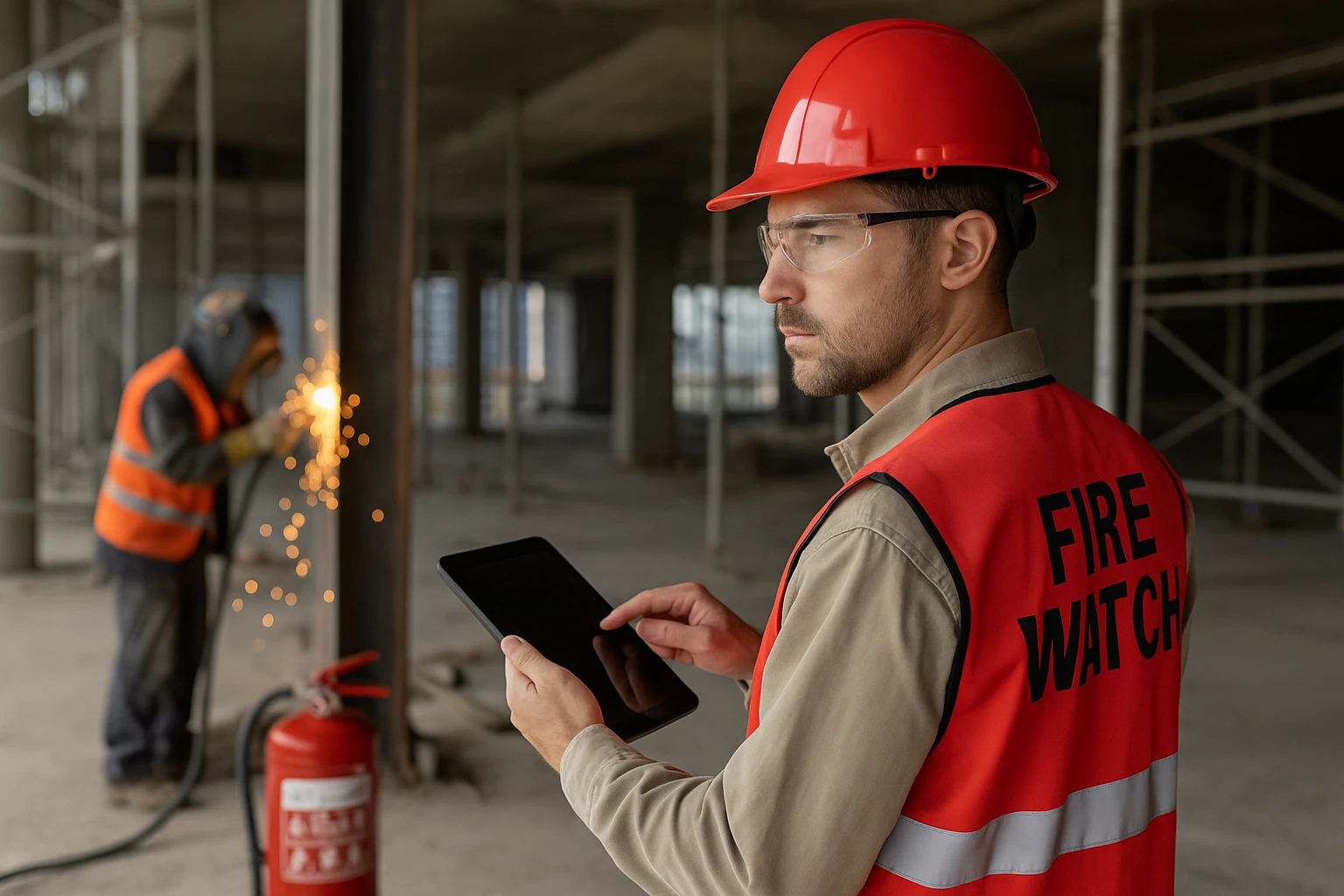
Construction fires cause over $50 million in damages annually across British Columbia, with hot work activities accounting for 60% of these incidents according to the Office of the Fire Commissioner. Professional fire watch services represent mandatory safety requirements that protect human life and construction investments during welding, cutting, and heat-generating activities.
WorkSafeBC regulations mandate continuous fire watch monitoring during and after hot work operations. These requirements encompass comprehensive safety management throughout construction phases.
Understanding BC Fire Watch Regulations and Compliance
British Columbia’s Occupational Health and Safety Regulation requires fire watch personnel during all hot work activities where fire suppression systems are impaired. Section 8.30 of the WorkSafeBC regulations specifies that qualified fire watch personnel must maintain continuous observation during hot work and for minimum 60 minutes after completion.
Municipal fire departments across BC enforce additional fire watch requirements through local bylaws that often exceed provincial minimums. Vancouver Fire and Rescue Services requires fire watch coverage for specific construction activities in high-risk areas.
Compliance documentation must demonstrate proper fire watch implementation through detailed logs, training records, and emergency response protocols. The BC Safety Authority conducts regular inspections with violations resulting in immediate work stoppages.
Rigid Security’s certified fire watch teams help complete regulatory compliance while protecting your construction investment. Our fire watch surveillance services maintain continuous monitoring that exceeds BC requirements, safeguarding your assets from fire-related losses.
Hot Work Permit Requirements and Documentation

Hot work permits establish formal authorization protocols that document fire safety preparations before welding, cutting, or grinding activities begin. WorkSafeBC requires written permits for all hot work operations, specifying fire watch personnel assignments, safety equipment placement, and emergency response procedures.
Permit documentation must identify all personnel involved in hot work activities, including certified fire watch operators who understand emergency protocols. The Canadian Welding Bureau emphasizes that proper permit procedures reduce construction fire incidents by 75%.
The right fire watch coverage depends on the property, the hours of risk, and what needs to be protected. Rigid Security streamlines permit compliance with comprehensive documentation systems that protect your project from regulatory violations. Our fire watch teams coordinate directly with your contractors to help coordinated hot work authorization while maintaining asset protection.
Professional Fire Watch Team Qualifications
Certified fire watch personnel must complete specialized training programs that cover fire behavior, suppression techniques, and emergency communication protocols specific to construction environments. The National Association of Fire Equipment Distributors of Canada provides standardized training that meets provincial requirements.
Fire watch team qualifications extend beyond basic fire safety to include construction site hazard recognition and coordination with active work crews. Professional fire watch personnel understand construction processes and can identify potential fire risks before emergencies develop.
Rigid Security’s fire watch specialists bring extensive construction experience that protects your assets through proactive risk identification. Our uniformed security teams provide dual-purpose personnel who combine fire watch duties with comprehensive site protection.
Emergency Response Procedures During Construction
Emergency response protocols establish clear procedures for fire detection, alarm activation, and coordinated response between fire watch teams and emergency services. Response procedures must account for construction site conditions including limited access routes and ongoing work activities.
Evacuation procedures require site-specific planning that considers construction limitations and worker location tracking. Fire watch personnel must understand evacuation routes while coordinating with construction supervisors to help complete personnel accountability.
Emergency service coordination involves pre-established communication protocols with local fire departments that understand site layout, access requirements, and specific hazards present during construction phases. The BC Professional Fire Officers Association recommends regular coordination meetings between fire watch teams and emergency responders.
Equipment shutdown procedures help fire watch personnel can quickly isolate utilities and halt construction activities that might complicate emergency response efforts. These protocols require training on temporary electrical systems, gas shutoffs, and equipment operation specific to each construction site.
Fire Suppression Equipment and Placement Strategies
Fire suppression equipment placement requires strategic positioning that provides immediate access during emergencies while protecting equipment from construction activities. Class A, B, and C fire extinguishers must be positioned based on specific hot work activities and surrounding materials.
Water supply systems for construction sites must provide adequate pressure and volume for both fire suppression and emergency service operations. Temporary water systems require regular testing to help functionality during fire emergencies.
The right fire watch coverage depends on the property, the hours of risk, and what needs to be protected. Portable suppression equipment includes specialized systems designed for construction environments where traditional suppression systems are not operational. Fire watch teams must understand operation procedures for different suppression systems and equipment compatibility with various fire types.
Post-Hot Work Monitoring and Documentation
Post-hot work monitoring requires continuous fire watch coverage for minimum 60 minutes after hot work completion, with extended monitoring for high-risk activities. Monitoring procedures include regular inspection of work areas, adjacent spaces, and materials that might ignite hours later.
Temperature monitoring using infrared thermometers identifies heat sources that could develop into fires long after hot work activities end. Professional fire watch teams understand heat transfer principles and can identify potential ignition sources.
Documentation requirements include detailed logs of monitoring activities, temperature readings, and any anomalies discovered during post-work inspection periods. These records support insurance claims and demonstrate regulatory compliance during WorkSafeBC inspections.
Final clearance procedures establish formal protocols for releasing work areas back to normal construction activities. Fire watch supervisors must verify complete cooling before authorizing resumed construction work.
The right fire watch coverage depends on the property, the hours of risk, and what needs to be protected. Professional fire watch services help comprehensive compliance with BC regulations while protecting construction projects from devastating fire losses. Rigid Security’s certified fire watch teams understand both regulatory requirements and practical implementation strategies that maintain safety without disrupting construction productivity.
Our fire watch specialists provide 24/7 asset protection through advanced monitoring techniques that detect fire risks before they threaten your construction investment. With immediate emergency response coordination and comprehensive documentation, Rigid Security safeguards your project from fire-related delays and financial losses.
Ready to help fire watch compliance for your construction project? Contact Rigid Security at (604) 751-4610 for professional fire watch services that meet all BC regulatory requirements while protecting your investment.
